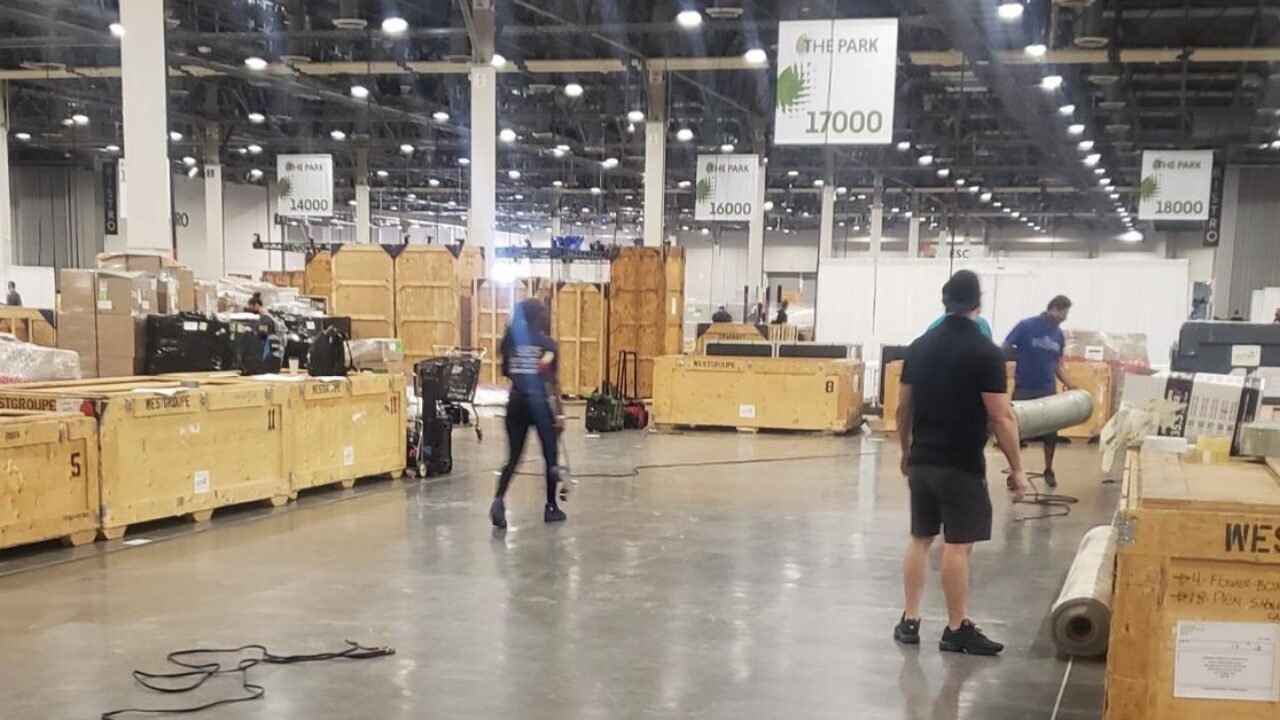
An advance warehouse is a facility, usually operated by or on behalf of the general contractor, that receives exhibit freight days or weeks ahead of a show and holds it until it can be delivered to the show floor on a scheduled basis rather than all at once.
For a show the size of the AUSA symposium, where dozens of exhibitors are moving in around the same days, routing freight through a warehouse first is often the only practical way to avoid every truck arriving at the exhibit hall dock simultaneously.
Smaller Huntsville events, such as a company day at Cummings Research Park or a single-day industry meetup, often skip the advance warehouse step entirely, since the volume of freight moving in on any given day is low enough that direct delivery does not create the same bottleneck.
What advance warehouse coordination protects against
- Dock gridlock from every exhibitor's freight arriving at once
- Freight sitting exposed on a dock before crews are ready
- Missed install windows caused by delivery timing
- Loss of scheduling control for the general contractor
Why freight goes to a warehouse first
Delivering every exhibitor's freight straight to the show site on the same morning would overwhelm the dock and the install schedule. The advance warehouse breaks that bottleneck by letting the general contractor receive freight over a longer window and then deliver it to the floor in a controlled sequence.
This also protects freight from sitting exposed outside in Huntsville's summer heat and humidity if it arrived too early for its scheduled slot at the show site itself.
Advance warehouse deadlines and what they protect
The warehouse deadline is typically earlier than the show-site freight deadline, since it accounts for the extra step of receiving, storing, and then transferring freight to the venue on a set delivery schedule.
Missing the warehouse deadline usually means freight has to go directly to the show site instead, which often carries a higher handling cost and a tighter timeline than warehouse routing would have allowed.
Staging freight for a scheduled delivery to the floor
Once freight is at the warehouse, it is staged for delivery to the show floor according to the install schedule, meaning a booth's freight typically arrives close to when its crew is actually ready to start building rather than sitting on the dock unattended.
That sequencing is part of why using the advance warehouse tends to result in a smoother install than freight arriving unscheduled at the venue.
- Freight staged to match the install schedule
- Reduced exposure time on an unattended dock
- Smoother install sequencing across the whole floor
What can go to the show site directly instead
Small shipments, personal vehicles, or freight arriving on the day of move-in itself sometimes go directly to the show site rather than through the warehouse, particularly for smaller booths with modest freight needs.
Whether that option is available depends on the specific show's rules, so it is worth confirming with the general contractor rather than assuming direct delivery is always permitted.
Keeping visibility on freight once it reaches the warehouse
Once freight is received at the warehouse, most general contractors can confirm it arrived and note its condition, which gives an exhibitor a checkpoint well before move-in rather than finding out the shipment's status only when the crew opens the crate on the show floor.
Requesting that confirmation directly, rather than assuming silence means everything is on track, is a simple step that catches a shipping problem while there is still time to respond before the install schedule locks in.
Frequently asked questions about advance warehouse coordination
How far ahead does freight need to arrive at the warehouse?
It depends on the show, but the warehouse deadline is set earlier than the show-site deadline to allow time for staged delivery.
Is warehouse storage included in the freight cost?
Storage terms vary by contractor, so it is worth confirming what is included before freight ships.
What happens if freight misses the warehouse deadline?
It typically has to go directly to the show site instead, often at a higher handling cost and tighter timeline.
Does small freight need to go through the warehouse?
Not always; smaller shipments sometimes go directly to the show site depending on the show's rules.
Can an exhibitor confirm freight arrived safely at the warehouse?
Yes, most general contractors can confirm receipt and condition, which is worth requesting rather than waiting until the crate opens on the show floor.