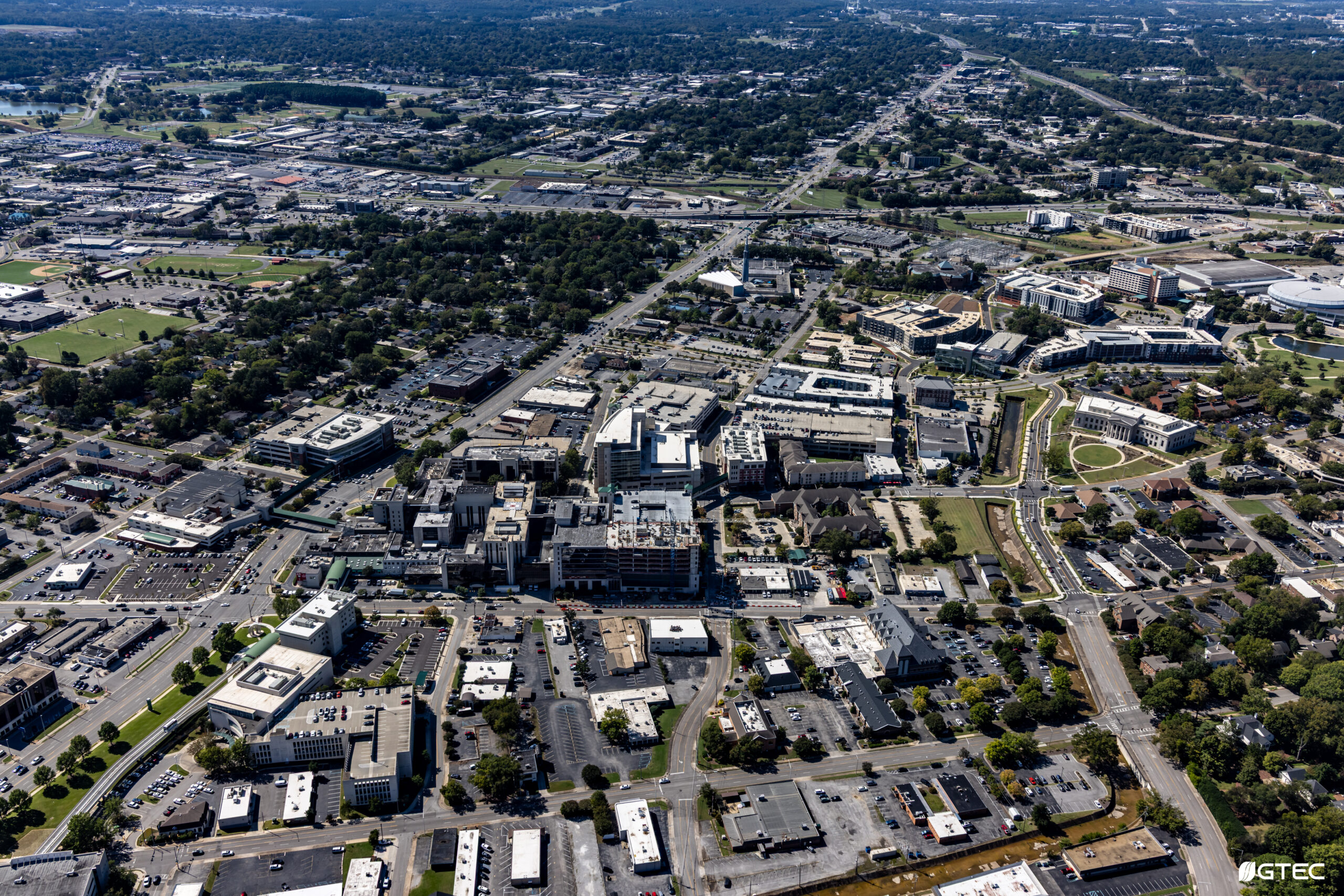
Medical District Huntsville centers on the Governors Drive corridor around Huntsville Hospital and Crestwood Medical Center, where continuing-education conferences, physician recruiting fairs, and medical device showcases fill hotel ballrooms and hospital auditoriums rather than a single dedicated hall.
Because much of this activity happens on or beside active hospital campuses, exhibit crews work around patient traffic, restricted corridors, and stricter loading-dock scheduling than a standalone convention venue requires.
The result is a niche but recurring category of event work: not the volume of a downtown convention, but a steady calendar of physician-facing programming that rewards a crew comfortable working inside a functioning hospital rather than a purpose-built hall.
What matters most in the medical district
- Loading-dock windows that respect hospital operations
- Careful handling of demo equipment and diagnostic hardware
- Badge and escort coordination for restricted floors
- Quick turnaround for single-day CME and vendor events
Working around an active hospital campus
Hospital-adjacent event space rarely offers the same freight elevators or dock capacity as a purpose-built hall, so crews plan material handling in smaller loads and shorter windows than a standard show floor allows.
Coordinating with hospital security and facilities staff ahead of move-in avoids blocking ambulance bays or clinical corridors during business hours, which matters more here than at almost any other venue type in the metro.
Even routine tasks like propping a door or staging a rolling cart can conflict with infection-control protocols that a standard venue doesn't enforce, so a crew working here benefits from a short briefing on the specific facility's rules before move-in begins.
Handling medical and diagnostic exhibits
Device manufacturers and pharmaceutical exhibitors often bring equipment that requires climate-controlled storage, careful crating, and documented chain of custody between sessions rather than an overnight lock-up in a generic storage room.
Booth layouts for these events tend to favor smaller footprints with private demo areas rather than open floor traffic, which changes how signage and power drops get planned compared with a consumer-facing show.
Crews who work these events regularly keep a running list of which manufacturers need which storage conditions, since an insulin-stability display and a surgical robot demo call for very different handling even when they arrive on the same morning.
- Climate-controlled overnight storage for sensitive units
- Documented handling for loaner and demo devices
- Private consult areas built into booth footprints
Scheduling around clinical hours
Physician audiences typically attend before or after shifts, which pushes move-in and teardown into early mornings or late evenings rather than a standard show day that runs on a hotel's normal service schedule.
Vendor fairs tied to grand rounds or CME credit sessions often run a single day, so exhibit setup has to be fast and predictable, with no room for the extended build times a multi-day show allows.
A show floor manager who already knows the hospital's shift-change times can plan around them instead of learning the hard way that a mid-afternoon move-in collides with a nursing shift change in the same corridor.
- Early-morning or evening load-in windows
- Single-day setup and breakdown turnaround
- Coordination with hospital parking and visitor access rules
Planning ahead for medical district events
Confirming dock access, elevator size, and security clearance with the hosting facility well before the event date prevents last-minute rerouting of freight through a corridor that wasn't built to carry it.
A short walkthrough of the specific floor or auditorium, rather than relying on a generic hospital layout, catches constraints such as narrow doorways or low ceiling clearance that only show up on site.
Building a simple contact sheet, who to call for dock access, who approves after-hours entry, who handles a locked door, saves real time on event day compared with tracking down answers on the fly inside an unfamiliar hospital building.
Medical district event logistics questions
Do medical device exhibits need special handling?
Sensitive diagnostic and demo equipment generally needs climate-controlled storage and a documented handoff between the exhibitor and the crew moving it, which is standard practice for hospital-adjacent shows.
Can setup happen during hospital business hours?
Most hospital-campus venues restrict loading dock and corridor use during peak clinical hours, so move-in is typically scheduled early morning or after evening shifts end.
How much lead time is needed for a hospital-adjacent event?
Confirming dock windows, elevator dimensions, and security badging with the facility ahead of time is worth doing several weeks out, since hospital scheduling teams often need advance notice.
What kind of events typically happen in the medical district?
Continuing-education conferences, physician recruiting fairs, and device or pharmaceutical showcases make up most of the calendar here, usually tied to Huntsville Hospital or Crestwood Medical Center rather than a standalone exhibit hall.