Hospitality suites and evening receptions around Huntsville's larger industry gatherings often draw a smaller, more senior guest list than the daytime exhibit hall, meeting at a downtown hotel ballroom or a venue like the Jackson Center near MidCity.
That guest list expects a room that reads more like a private gathering than a trade-show extension, even when the branding and messaging still need to carry through.
What a hospitality room has to get right
- A guest list read before the room design starts
- Bar and catering flow that does not bottleneck at the door
- Branding present but not dominating the room
- Sound levels that support conversation over a program moment
Reading the guest list first
A room built for two hundred casual attendees needs a different flow than one built for forty senior guests who each expect a real conversation, and the design should start from that number rather than a generic template.
Smaller, senior gatherings tend to favor more seating and fewer high-traffic pinch points, since the goal is depth of conversation rather than volume of interactions.
A guest list drawn largely from the Redstone Arsenal and Cummings Research Park business community also tends to know each other already, which favors clustered seating over a single long mingling line.
Bar and catering flow
A single bar station can serve a small guest list fine but becomes a bottleneck fast once the room passes a certain size, and that threshold is worth estimating honestly rather than optimistically.
Catering staff need a clear path that does not cross the main guest flow, particularly in a downtown hotel ballroom where the kitchen entrance and the main door are often on the same side of the room.
- Estimate bar capacity honestly against guest count
- Keep catering paths separate from guest circulation
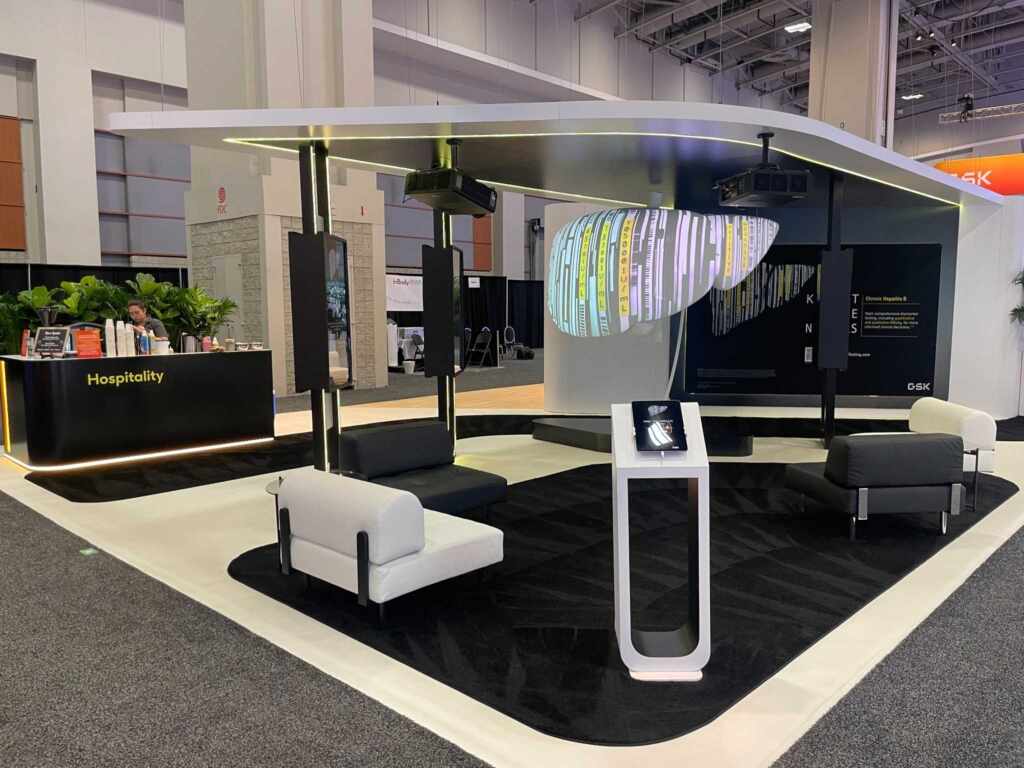
- Plan furniture zones for conversation depth over raw seat count
Branding that reads warm
A logo on every surface can make a hospitality room feel like an extension of the exhibit hall rather than a distinct evening event, which works against the more personal tone the format is meant to deliver.
A few well-placed branded touches, on a bar back or a step-and-repeat near the entrance, usually carry the message without overwhelming the room.
Cocktail napkins, name tags, or a small printed menu card give a place for a logo to appear naturally, without needing a large physical branding element competing with the room's own decor.
Sound for conversation versus program
Background music at a level that supports conversation is quieter than most people assume, and it needs a separate plan from any brief program moment, like a toast or a short remarks segment, that requires the room's attention.
A single volume setting for the whole evening rarely serves both purposes well.
Late-night breakdown and reset
A hospitality event that runs into the evening often needs the room reset for a different use the next morning, which means breakdown planning has to account for a hotel or venue's own turnover schedule.
Coordinating that turnover with the venue ahead of time avoids a late-night scramble when staff are already tired from a full conference day.
Rented furniture and decor pulled the same night, rather than left for a morning pickup, also reduces the chance of a piece going missing during a busy hotel changeover.
Frequently asked questions about branded hospitality environments
How is a hospitality room different from an exhibit hall booth?
It reads more like a private gathering, with more seating, fewer high-traffic pinch points, and branding that supports rather than dominates the room.
How many bar stations does a hospitality event need?
It depends on guest count; a single station works for smaller gatherings but becomes a bottleneck once the room passes a certain size, so capacity should be estimated honestly.
Should branding be heavy in a hospitality setting?
Usually not; a few well-placed touches near the bar or entrance tend to carry the message without making the room feel like an exhibit hall extension.
Does the sound plan change during a toast or remarks segment?
Yes; background music at conversation level is quieter than a program moment needs, and the two should be planned separately.
What happens after a late-night hospitality event ends?
Breakdown and reset are coordinated with the venue's own turnover schedule, especially if the room is needed for a different use the next morning.
Does the guest list affect seating layout?
Yes; a guest list drawn from a close-knit local business community tends to favor clustered conversation seating over a single long mingling line.