Booth lighting inside the Von Braun Center's Exhibit Hall has to compete with a bright, even house-light grid built for exhibitor traffic, while a reception at the US Space & Rocket Center's Davidson Center works against a much darker room centered on the Saturn V display.
Those are two different lighting problems with two different fixture counts, and treating them the same way usually means overlighting one room and underlighting the other.
What changes exhibit lighting design here
- Ambient house light in the venue booked
- Ceiling height and rigging access for accent fixtures
- Power circuits available at the booth or stage
- Dimming needs for video content versus product display
Fighting or working with house light
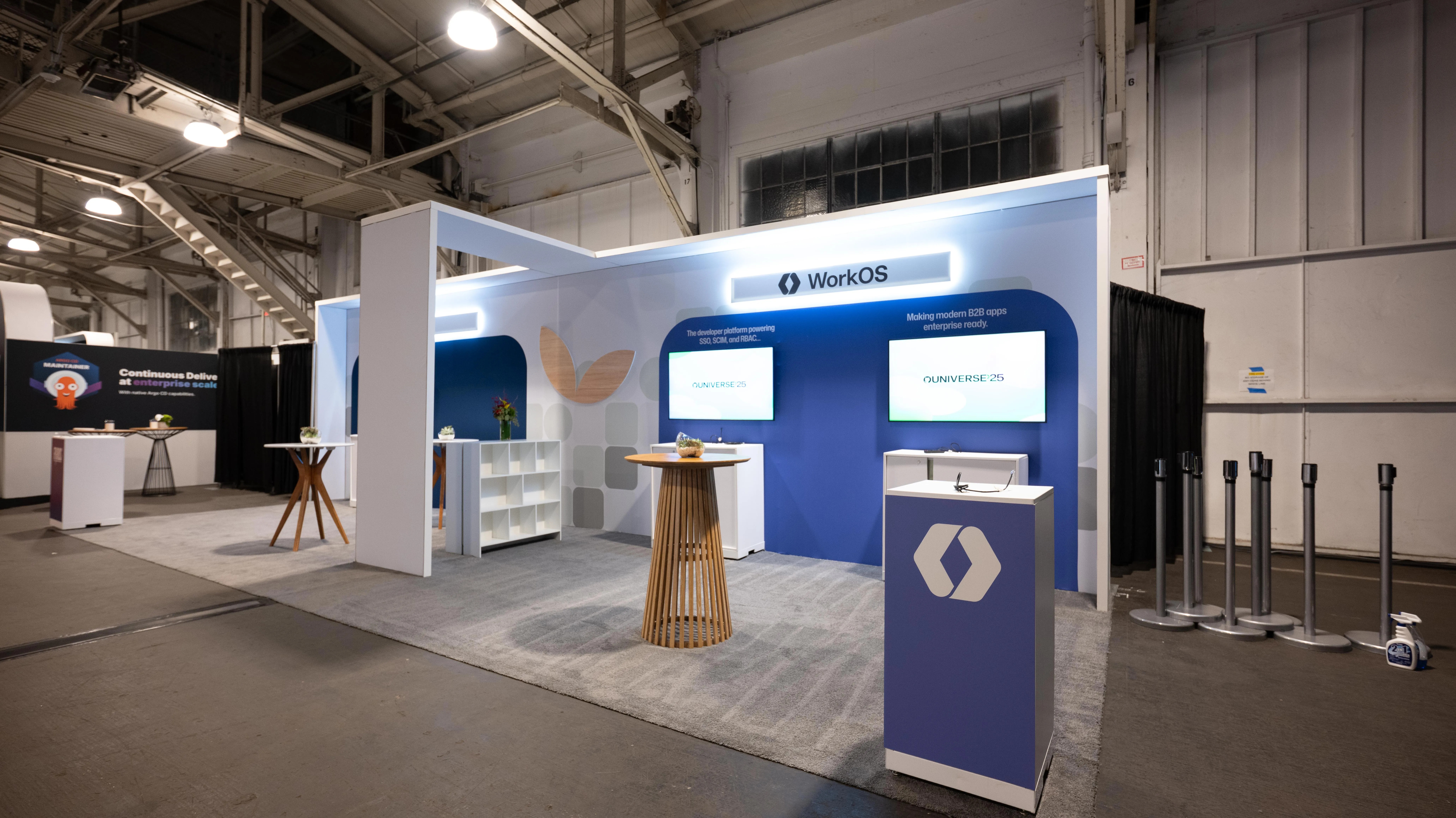
The Exhibit Hall's house lighting is bright by design, so exhibit lighting there mostly adds accent and product highlight rather than trying to overpower the ambient grid.
A gala inside the Davidson Center starts from near-darkness around the Saturn V, so the same fixture package that reads as a subtle accent in the Exhibit Hall can dominate a room built for atmosphere.
A written lighting plot, shared with the venue's own electrical staff ahead of move-in, gives the on-site team a reference to work from instead of relying on verbal instructions passed along on setup morning.
Ceiling height sets the fixture plan
Low-clearance booth spaces limit how far a fixture can throw before it washes out, which pushes lighting design toward smaller, closer-mounted units rather than long-throw stage fixtures.
A stage set inside the Mark C. Smith Concert Hall has the ceiling height to support traditional truss-mounted lighting, which is a different design problem entirely.
None of this requires a large fixture inventory; it mostly requires confirming the room's ambient conditions before a plan is drawn, rather than after a truck full of fixtures is already on-site and the schedule has no slack left to adjust the order.
- Measure clearance before selecting fixture throw distance
- Confirm circuit count at the booth, not only at the hall's main panel
- Plan dimming separately for video walls and product lighting
Power and circuits at the booth level
Exhibit lighting draws power from booth-level drops that were sized for a general electrical plan, not for a specific fixture package, so confirming circuit capacity early avoids a last-minute derate.
That coordination runs through the general contractor's electrical desk on-site, which is the same desk handling every other exhibitor's power request that week.
Designing for photography and video
A lot of Huntsville's technical and defense-sector clients photograph or record their booth for internal use, and flat, overhead house light rarely photographs well without added accent lighting.
A lighting plan built with a camera in mind, not only a walking visitor, tends to hold up better once the booth photos circulate internally.
Matching color temperature across rooms
The Exhibit Hall's house lighting tends to run a cooler, flatter color temperature suited to general show traffic, while accent fixtures brought in for a booth or reception often run warmer, and mismatched color temperature can make a product or display look off even when brightness is correct.
Checking the venue's house light temperature before selecting accent fixtures avoids a booth that looks fine in isolation but clashes once it sits next to the hall's ambient light.
Bringing a color meter to a site walk-through, rather than relying on memory from a prior show, is a small step that avoids a costly on-site fixture swap after the booth is already built and the mismatch becomes obvious.
Frequently asked questions about exhibit lighting in Huntsville
Does the Exhibit Hall's house lighting need to be turned off for booth lighting to show?
Usually not; house lighting stays on for general show traffic, so booth lighting is designed as an accent layer rather than a full room take-over.
How different is lighting for a Davidson Center reception versus a booth?
Significantly different, since the Davidson Center starts from a darker ambient base centered on the Saturn V display, which supports more dramatic uplighting than an exhibit hall allows.
Who confirms available power for booth lighting?
The general contractor's on-site electrical desk, which assigns and confirms circuit capacity for every exhibitor's booth power request.
Can lighting be adjusted for booth photography after setup?
Yes, minor angle and intensity adjustments are usually possible after initial setup, though major fixture repositioning is easier to plan for before load-in.
Why does color temperature matter for booth lighting in the Exhibit Hall?
The hall's house lighting runs a cooler, flatter tone than most accent fixtures, and a mismatch between the two can make product colors look inconsistent even when overall brightness is correct.