A 10x10 trade show booth is the roughly 100-square-foot inline space that most first-time and single-product Huntsville exhibitors buy, and it rewards tight messaging far more than it rewards extra hardware.
It is the workhorse format on the South Hall floor at the Von Braun Center, where the convention center alone offers more than 170,000 square feet of exhibit and meeting space and 82,000 square feet of that is column-free, so inline rows tend to be long and visibility from the aisle is the whole game.
Because Huntsville pulls steady recruiting, supplier, and product traffic out of Cummings Research Park and its 300-plus companies, a clean 10x10 often does more work for a CRP employer than a larger stand the team cannot staff.
What matters most for a 10x10 inline booth
- One headline message readable from across the aisle
- Lightweight, reusable hardware that ships cheaply
- Staffing for one or two people without crowding
- A lead-capture flow that fits the small footprint
How the 10x10 fits the Huntsville floor
On a long South Hall inline row, a 10x10 lives or dies on the back wall. The graphic has to land a single idea at aisle distance because attendees walking the Von Braun Center floor decide in a step or two whether to stop.
The format suits the technical and supplier audiences this market generates. A defense subcontractor qualifying for one of the region's 909 contractors, or a software team out of Research Park, usually needs a credible presence and a conversation more than it needs square footage.
Keeping the structure simple also keeps freight light, which matters when a booth ships through Huntsville International rather than trucking in from a regional warehouse.
Hardware and graphics that earn the space
The strongest 10x10 builds lean on a tension-fabric back wall, a counter that doubles as storage, and a single accent light. That mix reads as finished without forcing freight or labor costs up.
Graphics should carry the load. With only about 100 square feet to work with, a back wall that states what you do and why it matters will outperform a stand cluttered with literature racks and monitors.
- Tension-fabric back wall over hard panels for weight
- A counter that stores cases and handouts out of sight
- One product or one demo, not a catalog on the table
Logistics and show-day execution
A 10x10 should set in well under an hour, which lets a small team handle install without ordering extra labor. That is the practical advantage of the footprint, and the plan should protect it.
Huntsville's freight picture is friendlier than the metro's size suggests. The Port of Huntsville runs a serious air-cargo platform with weekly international service and roughly 300,000 square feet of cargo storage, so even imported or expedited materials can land here without a long inland haul.
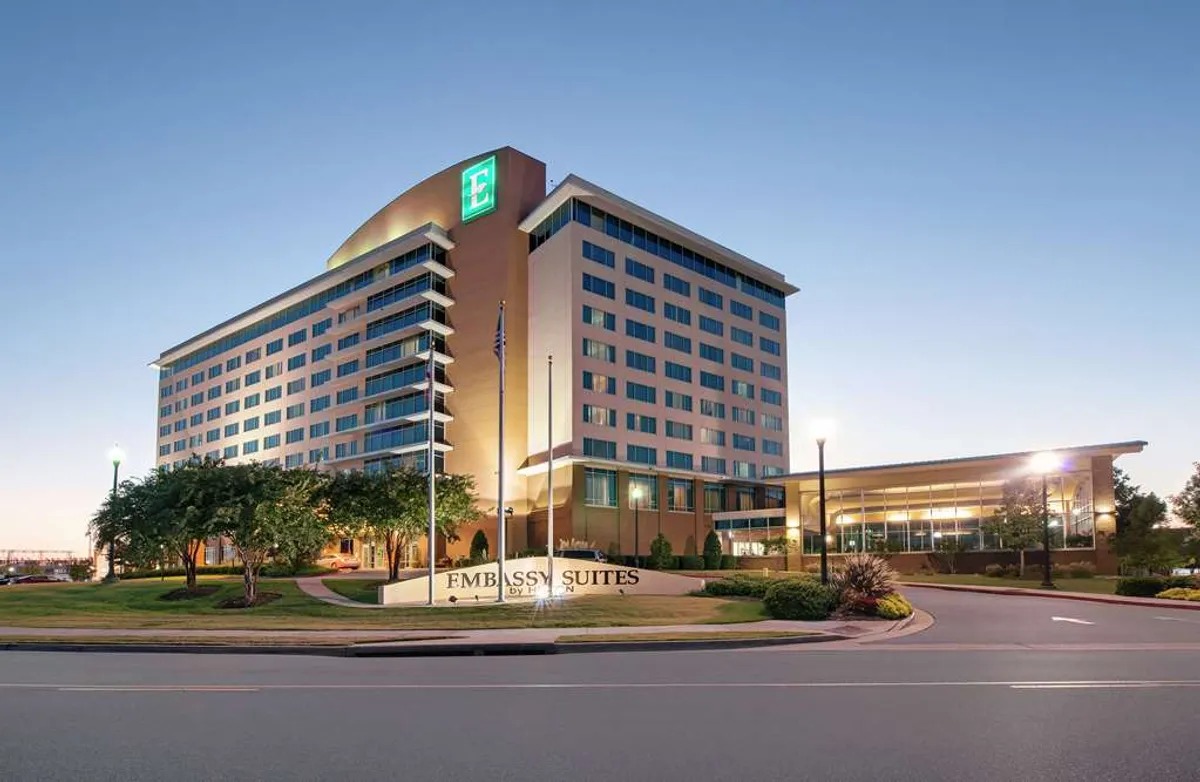
Where the booth ties into a downtown program, the Von Braun Center's dock access and the Embassy Suites skywalk next door keep the move-in tight.
- Plan a one-person, sub-hour install
- Pre-stage the case so setup order is obvious
- Confirm dock and aisle timing with the VBC team
When to size up instead
A 10x10 stops being the right answer when you need a seated demo, more than two staff, or private space for a quiet conversation. At that point a 10x20 or an island earns its added freight and labor.
Treating the upgrade as a deliberate decision rather than a default keeps the budget honest and the floor presence matched to how many people you can actually staff.
Frequently asked questions about 10x10 trade show booths
How many people should staff a 10x10?
One or two. More than that crowds the roughly 100 square feet and pushes visitors back into the aisle instead of into a conversation.
Is a 10x10 enough for a Von Braun Center show?
For most inline exhibitors, yes. A strong back wall on a South Hall row competes well, and the format keeps freight and labor low.
What should the back wall say?
One idea, readable across the aisle. State what you do and why it matters; save the detail for the conversation, not the panel.