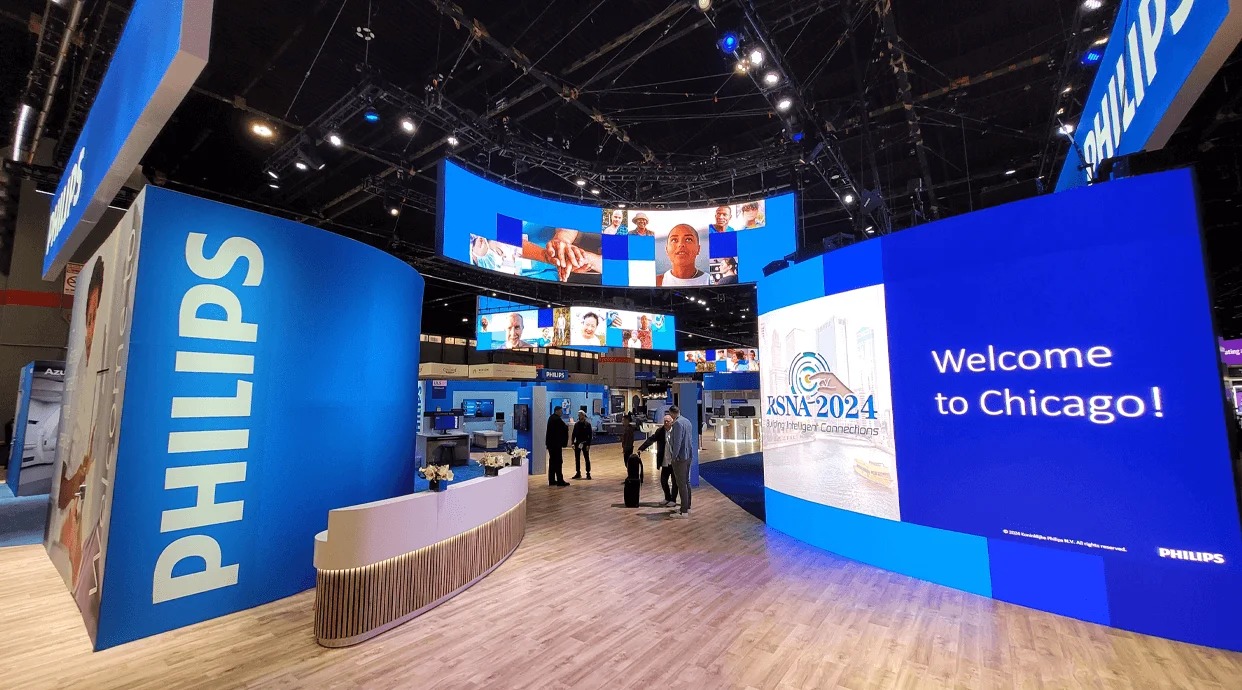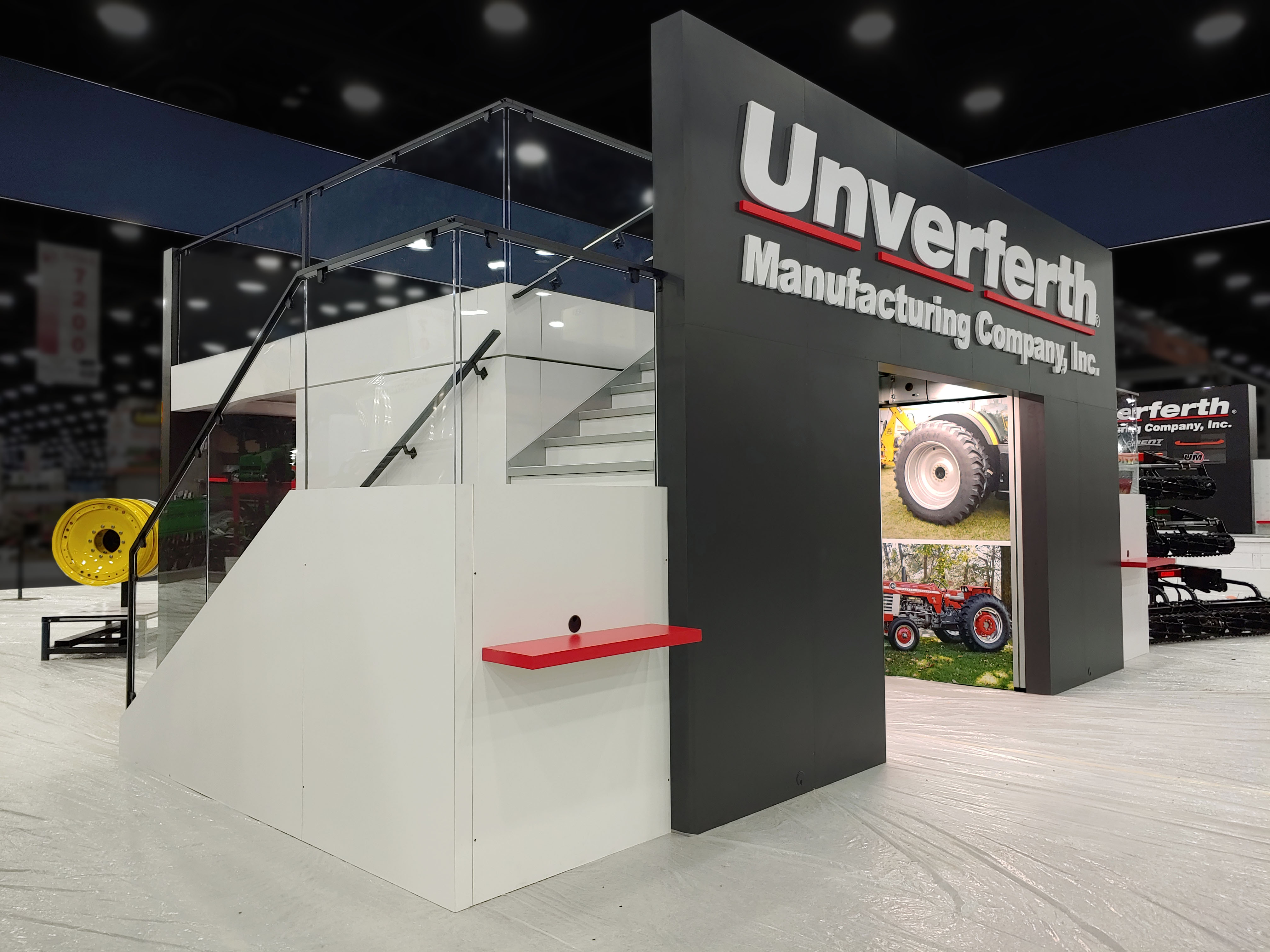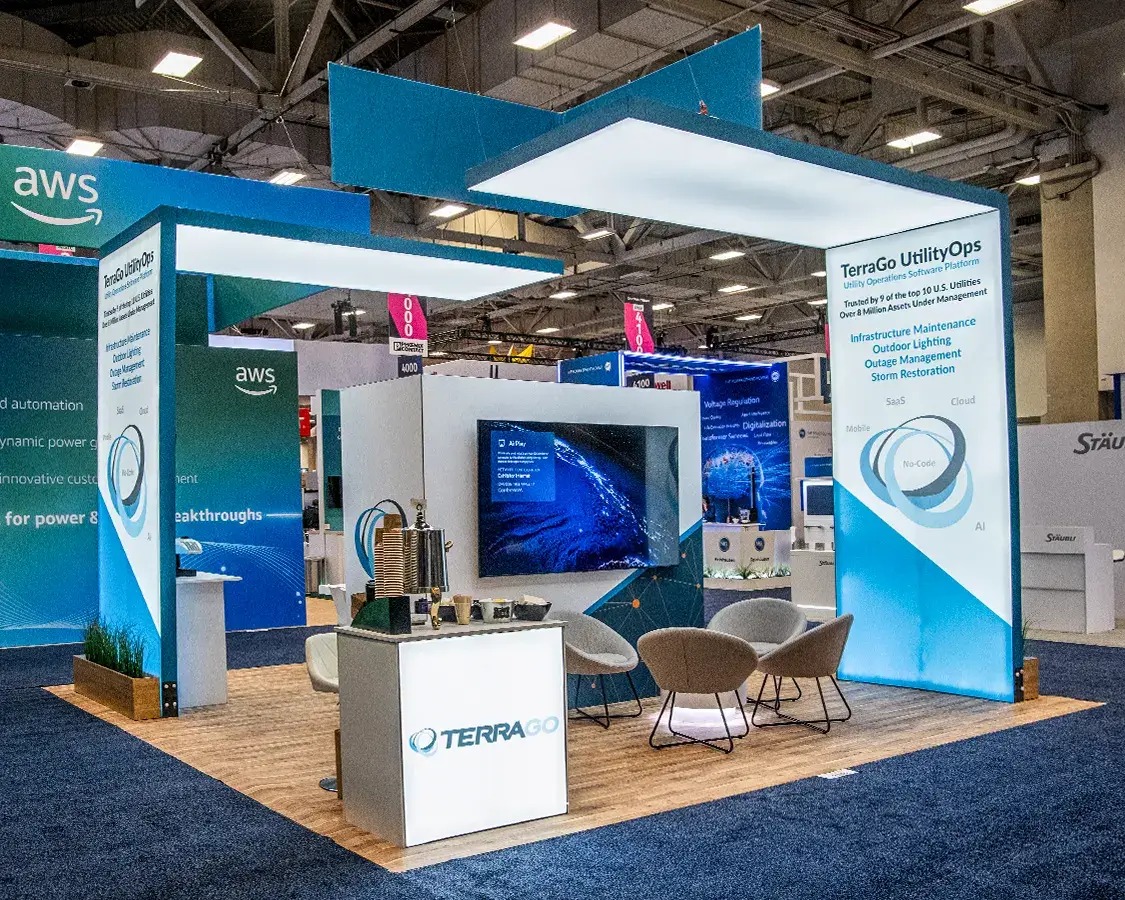
House lighting keeps a hall usable for every exhibitor at once, so it is even, general, and rarely flattering to a specific product or graphic.
A booth that wants a product to stand out, a logo to read clearly from the aisle, or a demo area to feel separate from the general floor needs its own lighting layered on top of that base.
What separates booth lighting from house lighting
- Wash versus spot versus accent, chosen by what needs attention
- Available circuits at the specific booth location
- Focus time before doors open to attendees
- Whether the booth sits under a tent or open sky for an outdoor add-on
House rig versus booth-specific lighting
The general wash from the venue's overhead rig is enough to walk the floor safely but does little to pull attention toward a specific ten-by-ten or ten-by-twenty booth in a busy row.
Booth-specific fixtures, even a modest pair of spots on a backdrop graphic, create contrast against the flat house light and give attendees a visual cue about where to look first.
Choosing wash, spot, or accent by booth type
A wash fixture works well across a broad backdrop or a full display wall, while a spot is better suited to a single product on a pedestal or a small demo table.
Accent lighting, used sparingly on a logo or a call-to-action panel, tends to do more for recall than flooding an entire booth with even brightness.
Color temperature also matters more than most exhibitors expect, since a fixture that reads warm and inviting under house lighting can look flat or slightly off once it competes with a neighboring booth's cooler white light.
- Backdrop wall or graphic run: wash lighting
- Single product or pedestal: spot lighting
- Logo, signage, or CTA panel: targeted accent
Power draw and circuit planning
Every added fixture pulls from the same circuit allotment as monitors, chargers, and any powered demo equipment in the booth, so the lighting plan has to account for that shared load rather than being priced in isolation.
Confirming amperage with the venue's exhibitor services desk before the show avoids tripping a circuit on the busiest hour of the floor.
Focus and cue time before doors open
Fixtures aimed and focused the night before, rather than the morning of, give the crew time to walk the booth from an attendee's eye line and adjust glare or hot spots.
A short cue list, even for a single-booth setup, keeps house lights, booth lights, and any monitor content synced when the floor officially opens.
Walking the booth at the same time of day the show will actually open also catches glare from a nearby window or skylight that a late-night focus session would miss entirely.
Outdoor and tented lighting needs
Events that spill outside a downtown Huntsville venue, whether onto a plaza or under a tent, need weather-rated fixtures and a power plan that does not depend on the building's house circuits.
Alabama's summer humidity and the chance of an evening storm both push toward sealed fixtures and a generator or distro plan checked in advance rather than assumed.
Cable runs across a plaza or lawn also need to be taped down or ramped, since an outdoor crowd moves less predictably than one confined to a marked exhibit aisle.
Frequently asked questions about trade show lighting rentals
Is the venue's house lighting enough for a booth?
It keeps the hall walkable, but it rarely makes a specific booth stand out; most exhibitors add wash, spot, or accent fixtures on top of it.
How much power does booth lighting typically need?
It varies by fixture count, but lighting shares the same circuit allotment as monitors and demo equipment, so total draw should be confirmed with the venue ahead of the show.
When should lighting be focused and aimed?
The night before doors open, if the schedule allows, so glare and hot spots can be checked from an attendee's eye line rather than guessed at during setup rush.
What lighting works for a single product display?
A spot fixture aimed at the product usually reads better than a broad wash, which is more suited to backdrop walls or full display graphics.
What changes for an outdoor or tented setup?
Weather-rated fixtures and an independent power plan, since outdoor events cannot rely on the building's house circuits and North Alabama weather can turn quickly.
Do outdoor cable runs need extra precautions?
Yes; taping or ramping cable across a plaza or lawn matters more than indoors, since a crowd outside moves less predictably than one confined to a marked aisle.