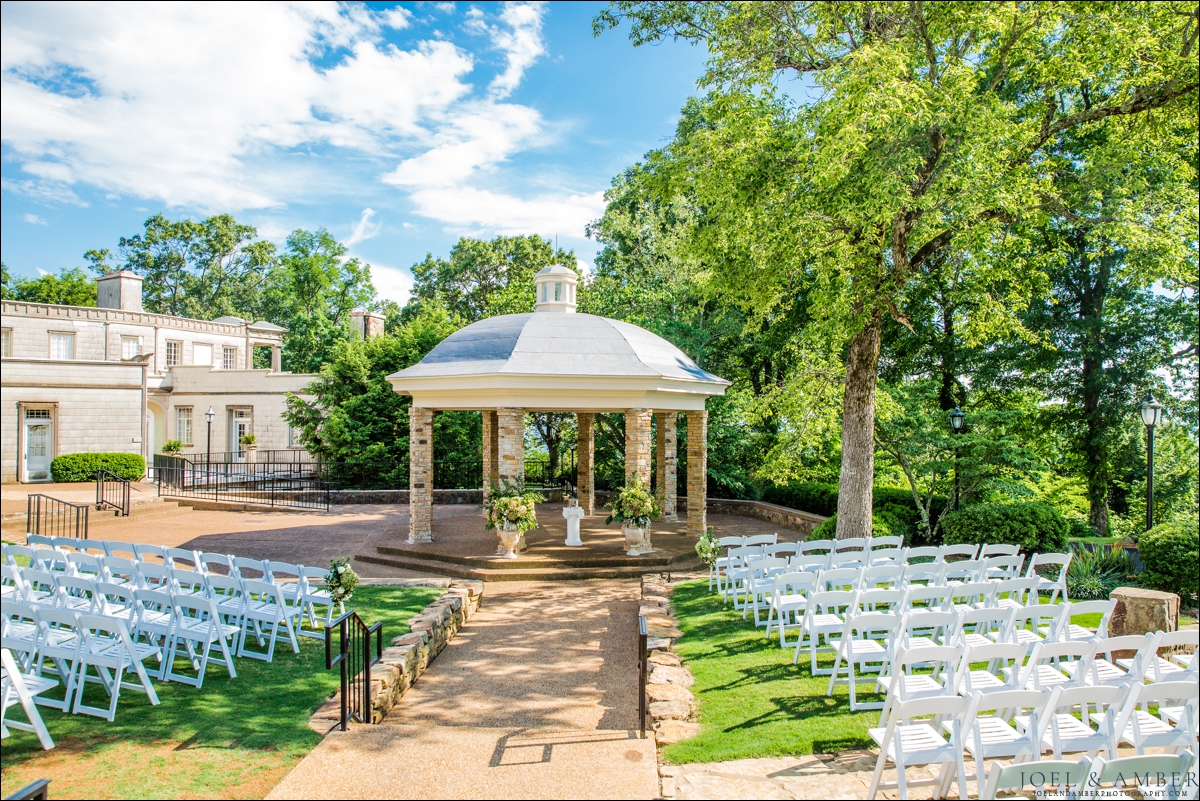
The property combines a historic home and a living-history farm museum with event space, and its hilltop position gives an evening program a view of the city below.
That makes it a fit for a VIP dinner or small executive gathering rather than a large convention.
A planner should also confirm restroom, kitchen, and staging capacity before finalizing a guest count, since a historic house museum was built for public tours rather than for catering a seated dinner at scale.
A program should also ask about noise and lighting curfews tied to the property's residential surroundings, since a historic hilltop site sitting near neighboring homes may carry different evening-hours expectations than a downtown venue with no adjacent residences to consider. A program should also confirm whether the historic home's interior rooms are available for a rain backup plan, since an outdoor evening event on the mountain benefits from a confirmed indoor alternative rather than a last-minute scramble if weather turns. Confirming these details with the property directly before the contract is signed keeps surprises from surfacing during setup week.
What the mountaintop setting changes
- Mountain-road access instead of a downtown street grid
- Limited scale versus a convention-size program
- Skyline views as the venue's core draw
- Historic-property rules around setup and vendors
Verified venue facts
- Burritt says its facilities are suited for strategic off-site meeting space.
- The View is a 3,000-square-foot overlook event venue with sweeping views over Huntsville.
A historic property, not a convention hall
The combination of a historic home and farm museum means the venue was never built for large-scale freight or booth setups, so a program considering it should already be thinking small and executive-focused rather than convention-sized.
Getting up the mountain
Access runs along mountain roads rather than a downtown street grid, which changes how vendor trucks, catering vehicles, and guest arrival should be planned compared with a flat-access venue like the Von Braun Center.
- Confirm vehicle access and any road restrictions ahead of the event
- Scope catering and setup around the historic property's own rules
- Plan guest arrival with the mountain drive in mind, not a downtown walk
The view as the reason to book it
The skyline view from the mountaintop is the property's main draw, so an evening event timed around sunset or nightfall gets more value from the setting than a daytime meeting would.
Fit for a small, high-touch group
A VIP dinner, board retreat, or small donor or client appreciation event suits the property's scale far better than a general-attendee trade show, which belongs at a larger downtown or campus venue instead.
Working within a historic building's real limits
A historic home was not designed with a modern catering kitchen or a large staging area in mind, so a caterer should walk the property in advance rather than assume standard event-hall infrastructure is already in place.
Restroom capacity on a historic property also tends to be smaller than a purpose-built event venue, which matters more as the guest count grows, and should be confirmed against the actual expected headcount.
None of these limits should surprise a planner who treats the property as a historic house first and an event venue second, which is the right way to approach the booking from the start.
Frequently asked questions about Burritt on the Mountain
Is Burritt on the Mountain suited to a large trade show?
No, its historic-property scale fits a small executive gathering or VIP dinner far better than a large, booth-based show. A caterer should walk the property in advance rather than assume standard event-hall kitchen infrastructure.
How does mountain access affect event planning here?
Vendor trucks, catering vehicles, and guest arrival all run along mountain roads rather than a downtown street grid, so access should be confirmed ahead of time. Restroom and staging capacity should also be confirmed against the actual expected headcount before the date is locked.
What time of day makes the best use of the venue?
An evening event timed around sunset or nightfall gets the most value from the skyline view that makes the property distinct. That timing also helps with the mountain road, which is easier to navigate in daylight than after dark.
Does the historic property have its own setup rules?
Yes, catering and setup need to work within the historic home and farm museum's own rules, which differ from a standard event hall. Those rules should be confirmed with the property directly rather than assumed from a standard venue contract.