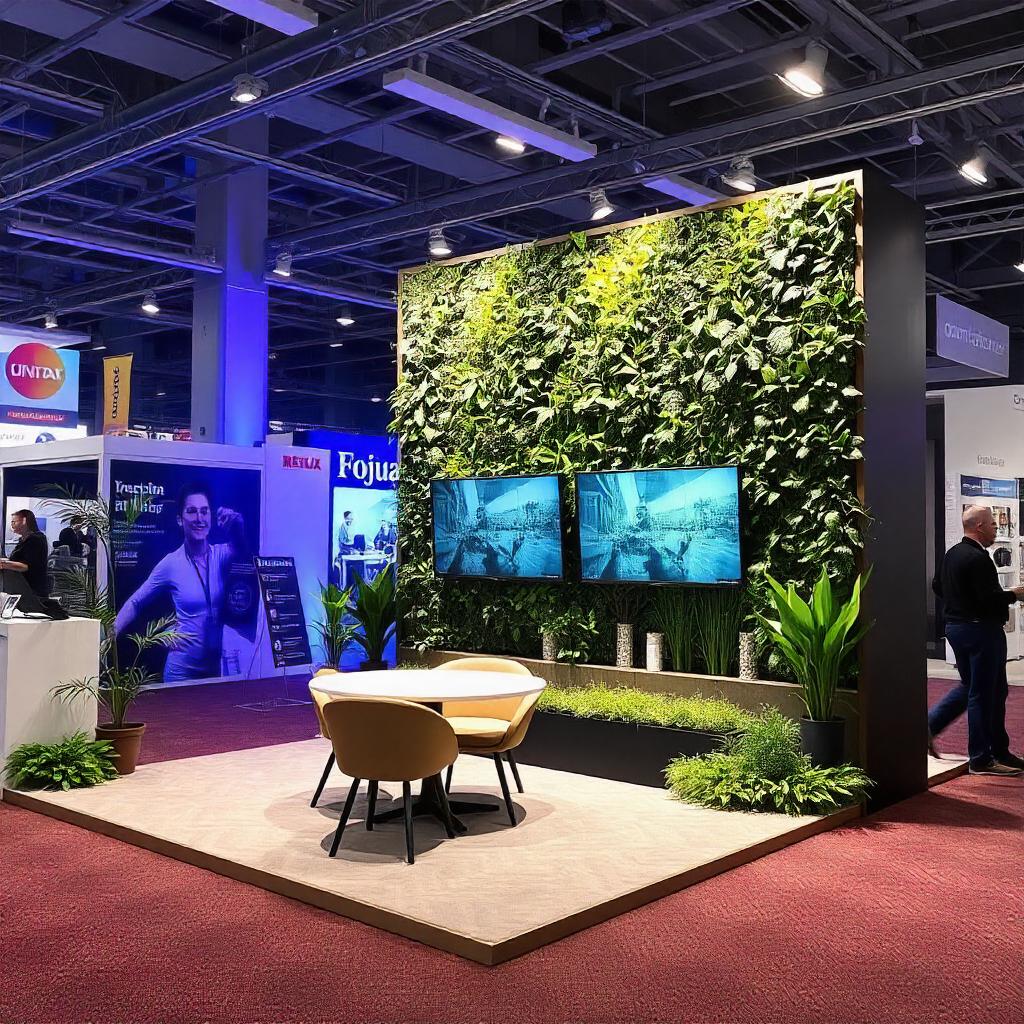
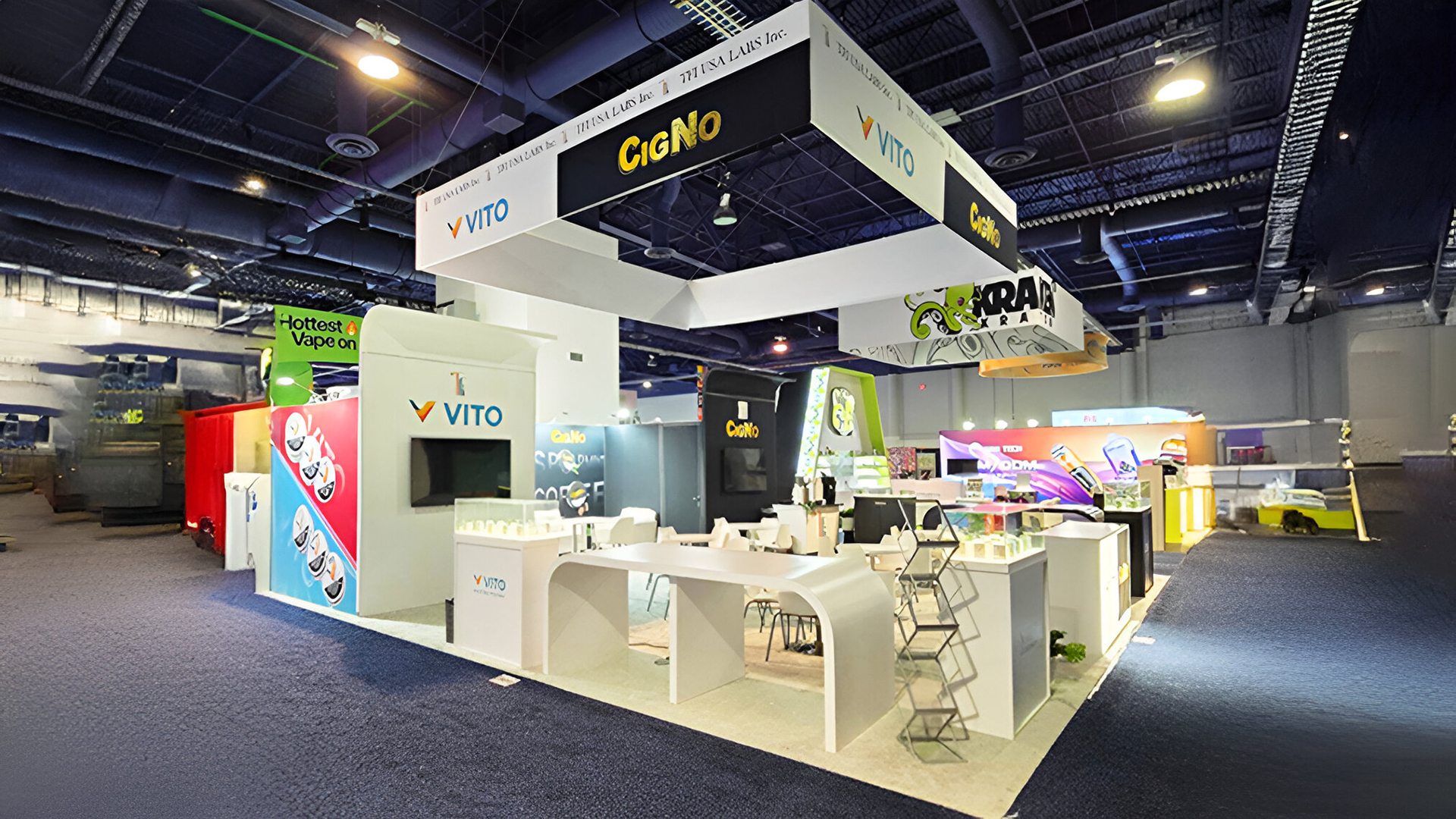
A 10x20 trade show booth is the roughly 200-square-foot double inline space that gives a Huntsville exhibitor enough room to separate a demo zone from a meeting corner without stepping up to an island.
It is a common choice for advanced-manufacturing and aerospace exhibitors here, where employers such as Mazda Toyota, Polaris, GE Aviation, and the region's rocket-engine programs bring equipment or seated demonstrations that a 10x10 cannot hold.
On the Von Braun Center floor, where South Hall carries more than 100,000 square feet of continuous exhibit space, a 10x20 can anchor a longer stretch of aisle while still reading as a single, organized presence.
What matters most for a 10x20 inline booth
- A clear split between demo space and conversation space
- A back wall long enough to brand the full 20-foot run
- Staffing for two or three people across the footprint
- Storage and power planned so the floor stays clean
Zoning the 200 square feet
The added length is the point of a 10x20, so the layout should put it to work rather than spreading one 10x10's worth of content across twice the wall. A practical split keeps an open demo or product zone on one side and a quieter corner for follow-up on the other.
For Huntsville's supplier and recruiting audiences, that second zone matters. A defense contractor or a CRP technology employer can run a live demo at the aisle while a recruiter or sales lead has a real conversation a few feet away.
A continuous back wall ties the two halves together and gives the stand the reach a long South Hall row demands.
- Demo or product zone at the aisle edge
- A meeting or recruiting corner set back from traffic
- One unbroken back-wall graphic across the 20 feet
Why the format fits this market
Huntsville's event demand leans technical and equipment-heavy, which is exactly where the 10x20 earns its keep. The market mixes aerospace, defense, advanced manufacturing, and a growing med-tech base, and many of those exhibitors need to show something physical.
The metro also makes attendee and exhibitor travel easier than its size implies, with Huntsville International marketing nonstop service to 18 cities and a record 1,635,589 passengers in 2024, so a 10x20 program can reasonably expect regional and out-of-market visitors.
Freight, labor, and setup
A 10x20 carries more hardware than an inline 10x10, so install usually moves from a single person to a small crew. The plan should set that expectation early and order labor against the actual move-in window.
Power and data drops need to land where the demo zone sits, not where the back wall happens to be, so the floor order has to follow the layout rather than the other way around.
Decatur and the Shoals sit close enough by road that a North Alabama roadshow can reuse the same 10x20 kit across stops, which spreads the build cost across more than one date.
- Order labor for a small-crew install, not a solo set
- Place power and data under the demo zone
- Reuse the kit across regional stops where it fits
Budget discipline on a double inline
The risk with a 10x20 is paying for length you do not light, brand, or staff. The safest budget treats graphics coverage, lighting, and staffing as one decision so the full 20 feet actually reads as intentional.
When the footprint, the demo, and the crew are matched up front, a 10x20 delivers most of what exhibitors think they need an island for, at meaningfully lower freight and labor cost.
Frequently asked questions about 10x20 trade show booths
When is a 10x20 better than two 10x10s?
When you want a single branded run and a real split between a demo zone and a conversation corner, rather than two disconnected inline spaces.
Can a 10x20 handle a live equipment demo?
Yes. The roughly 200 square feet gives room for a demo at the aisle while keeping a quieter corner for follow-up, which suits Huntsville's technical exhibitors.
How many staff does a 10x20 need?
Usually two or three, so one can run the demo while another handles conversations without the stand feeling crowded or empty.